
How Traffic Warrants Work in Wayne County
Wayne County Court handles traffic tickets and municipal-ordinance violations. A citation usually demands payment, a plea, or a court appearance. Miss that step, or leave a court-ordered balance unresolved, and state guidance says a warrant plus a license suspension can follow in eligible cases. Not every unpaid ticket ends that way. The docket and the clerk decide the case's present status. The official path is narrow but reliable. Locate the citation, identify the court case, read the register of actions, then call the clerk. A citation amount is not a warrant flag. And a clean search result is not proof that no court process exists.
| Traffic question | Official route | What it confirms |
|---|---|---|
| Lost citation | Nebraska citation interface | Possible citation and county trail |
| Case status | JUSTICE or County Court | Docket events and clerk direction |
| Payment eligibility | State ePayments and County Court | Whether the exact matter can be paid online |
Wayne County Traffic Court
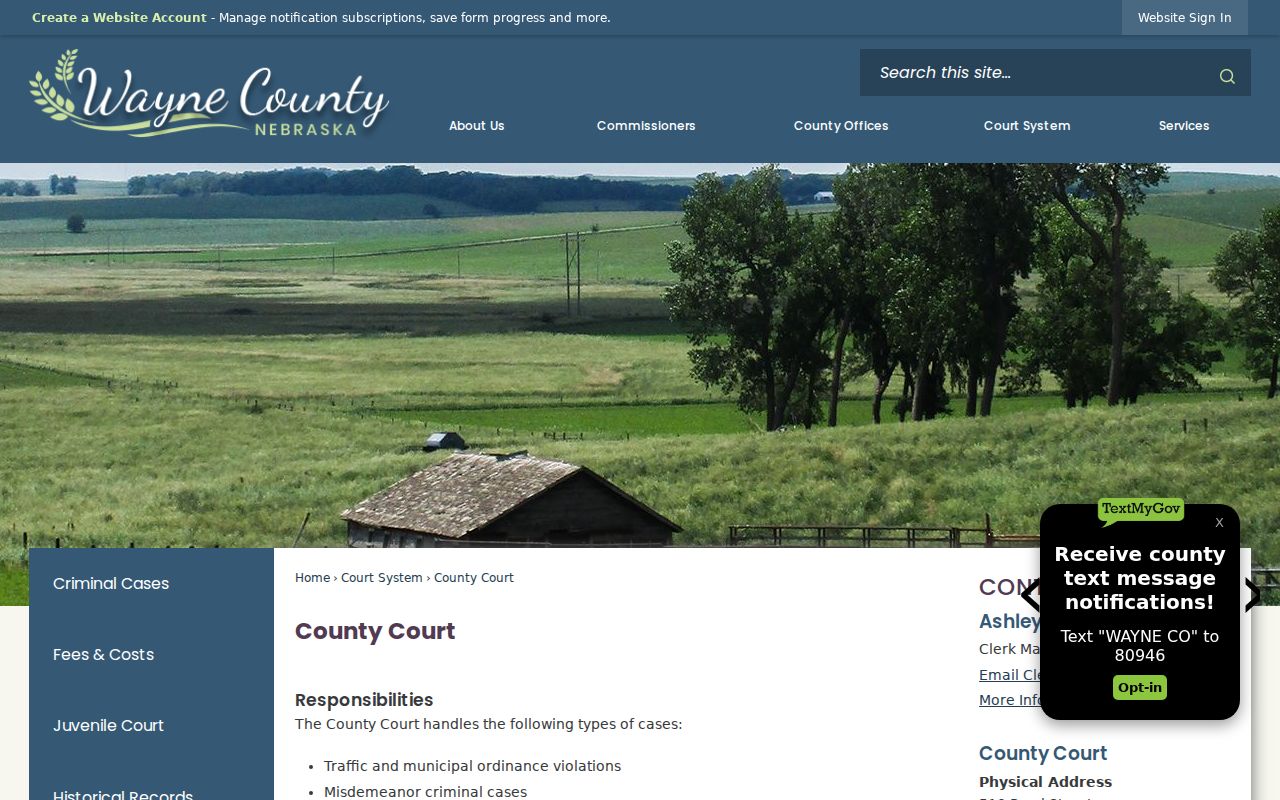
Wayne County Court sits at 510 Pearl Street, Suite B, Wayne, Nebraska, and the published phone is 402-375-1622. Traffic, municipal-ordinance, misdemeanor, and preliminary-felony matters all land on its docket. District Court is not the routine ticket stop. A related felony, appeal, domestic case, or contempt issue can still push a matter onto a different docket. For Wakefield, read the filing county and court with care. Wakefield straddles the Wayne and Dixon County line, so the ticket tells you which court holds the case. Winside, Hoskins, and Carroll post no independent traffic-warrant portal of their own. A city code explains an ordinance, but only the filing court can say whether a Wayne County warrant exists.
The County Court profile identifies the local traffic venue and public-access route. Read the Wayne County Court source before choosing a payment or appearance path.
Wayne County Traffic Warrant Checks
Start by gathering the citation number, citation date, county, your name as written, and the issuing agency if known. Use the official Nebraska citation interface to locate a lost ticket. Then pull the County Court case in JUSTICE or at the public terminal. Scan it for the citation, plea, payment, failure to appear, warrant, recall, bond, and final events. Call the Wayne County Court for the current answer and the exact clearing step.
- Check the citation county and named court.
- Enter the citation type, number, and date in the state route.
- Use JUSTICE to connect the citation to a case.
- Ask whether the matter is payable, appearance-required, or under a warrant.
- Keep any receipt, hearing date, or judge order.
A citation search is not a warrant confirmation. The clerk’s answer controls.
Wayne County Citation Field Map
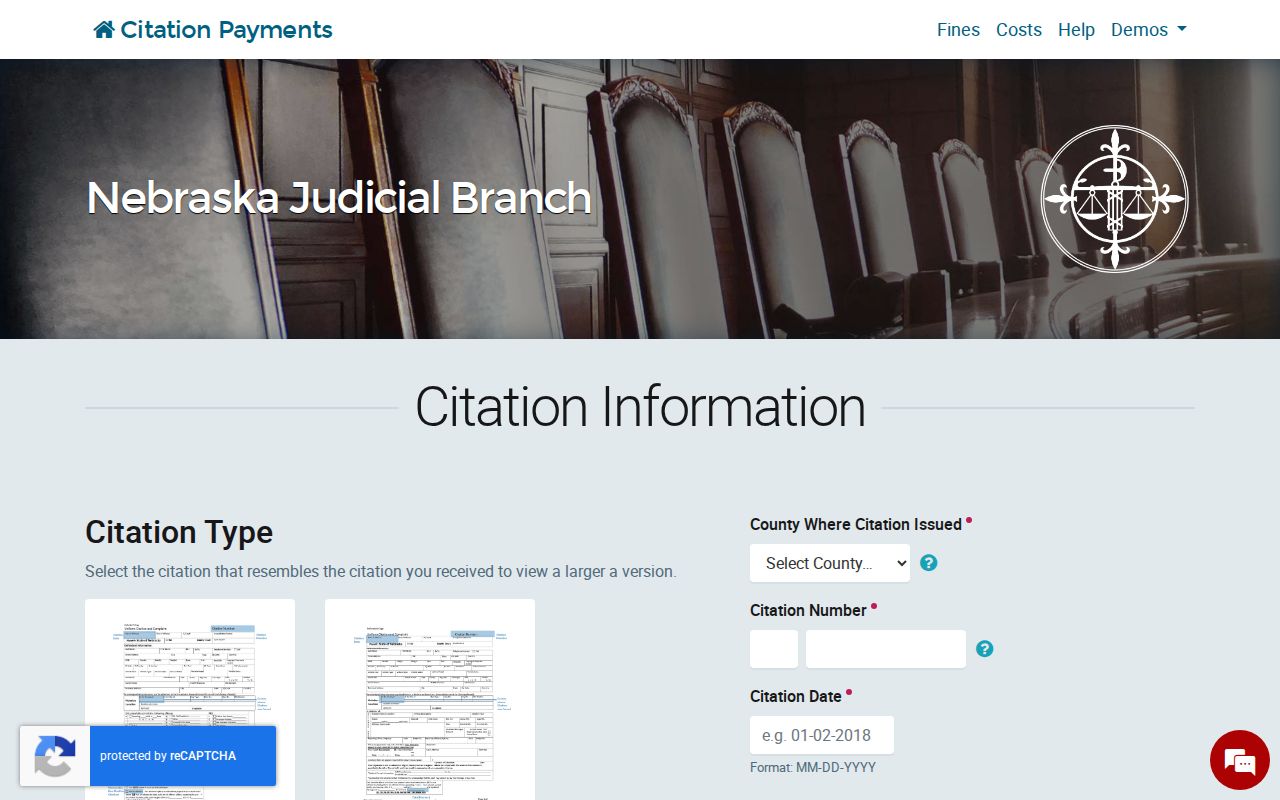
The state citation screen shows a field map that helps recover a lost ticket. It finds citation data, nothing more. It cannot certify where a Wayne County case stands today. Address fields may help you tell records apart, and the amount field is a financial clue, not a warrant status.
| Field | Use | Caution |
|---|---|---|
| Citation type | Choose standard or electronic citation | Does not show recall |
| County | Choose where the citation issued | City location may cross a county line |
| Number | Best paper-to-case bridge | Enter exactly |
| Date | Use requested date format | Warrant date may be later |
| Person and address | Narrows a lost citation | Keep personal data private |
The official citation interface supplies these field labels. Open the Nebraska citation route for the current screen.
Inside a Traffic Warrant Record
Read a Wayne County traffic case in time order. The citation date is not the warrant date. A payment can post to the financial record while the warrant still stands, and a returned warrant can sit in the history forever. Watch the case number, the court, each event date, and any later judge or clerk action.
| Citation number | Original ticket identifier and bridge to the court case. |
|---|---|
| Case number | County Court docket identifier. |
| Appearance event | Required date, plea, hearing, or missed appearance. |
| Warrant event | Issuance, active listing, recall, service, or return. |
| Financial event | Fines, costs, restitution, payment, or agreement fields. |
| Disposition | Later case result, distinct from an earlier warrant entry. |
A sample like CIT-000000 shows the format only. Real Wayne County case numbers belong to the court record, not to examples.
Wayne County Online Payment Caution
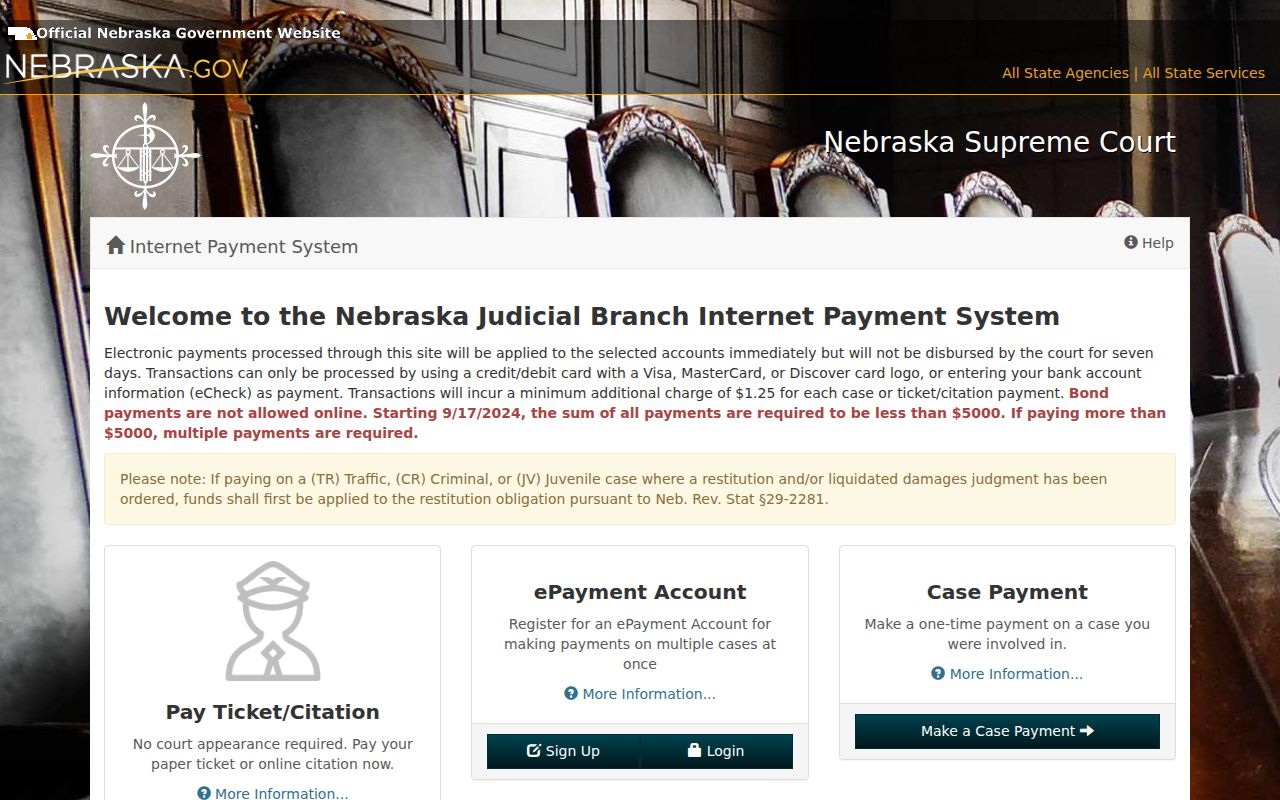
Nebraska ePayments handles eligible ticket and case payments. The state page warns against paying online when an appearance is required, and it lists matters that need court handling instead. Wayne County's own pages pull in two directions. The FAQ says tickets may be paid online. The fee page says the office takes no credit or debit cards. Ask the County Court about your exact case before you pay. A payment can satisfy the money owed without recalling an FTA warrant. Keep the receipt, and ask whether the docket needs a judge's order, a hearing, or a separate appearance. If the payment screen and the citation disagree, the court's direction controls.
The state ePayment route contains the appearance warning. Review Nebraska court ePayments before using an online option.
Clearing a Wayne County Traffic Warrant
Ask the clerk first. Is payment enough, or does the court require a motion, an appearance, a hearing, bond, or surrender? Nebraska law provides an ability-to-pay hearing framework after arrest on certain failure-to-pay or failure-to-appear warrants. The County Court can also set up a time-payment agreement, with fields for the case, citation, fines, costs, restitution, total, due date, payment rate, appearance, contact details, and signature. Outcomes vary. An accepted payment, a new date, a payment plan, community service, an indigency review, a judge's recall, or continued process are all possible. No single remedy is guaranteed. The court must accept the option and enter the result on the Wayne County docket.
Ask before paying: Confirm whether the citation requires an appearance and whether a warrant or FTA entry needs separate court action.
Wayne County Time-Payment Terms
Form CC 2:7 lays out a time-payment agreement field by field. It covers case and citation identifiers, fines, costs, restitution, the due date, the payment rate and date, appearance information, address, email, phone, and the signature block. Its warnings are direct. Nonpayment may suspend a license, and failure to appear may bring an arrest warrant. The form itself proves nothing about any particular agreement in Wayne County. If ability to pay is the worry, ask what review or installment process the court applies. Keep every financial form, receipt, or agreement you receive. The county office payment rule and the state online route may differ, so confirm where the court wants the transaction handled.
How Traffic Warrants Trigger License Holds
Nebraska court guidance ties a missed court date or an unpaid fine to possible warrant and license-suspension consequences. Those consequences live in the case itself. A citation portal is not a status screen. So call the Wayne County Court clerk and ask whether the docket shows a failure to appear, a warrant, a payment, or a reporting event. The clerk can read the docket entry. A license question is a separate record. The state motor-vehicle office controls that one, and the court handles the case.
Wayne County Traffic Court Recheck
After payment, a hearing, or a judge's action, ask how the result will land in the Wayne County docket. Keep the receipt and the new date. Recheck JUSTICE or the courthouse terminal. Do this once the clerk says the entry is posted. A name missing from an older active warrant list is no substitute for the case entry itself.
| Before action | Confirm court, case, citation, warrant, and appearance status. |
|---|---|
| During action | Use the court-approved payment, motion, hearing, or surrender route. |
| After action | Retain receipt, order, agreement, or new date and recheck the docket. |
Traffic court records are specific. A clean answer comes from the identified filing court.